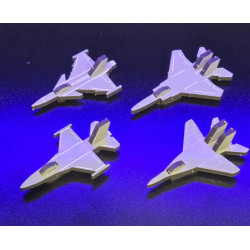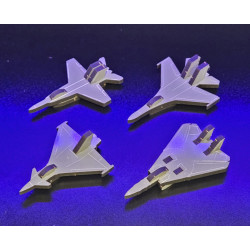


3D Model Build Your Own Fighter Jet, 3rd Generation fighter jets, MIG-23 Flogger, MIG-25 Foxbat, F-4 Phantom, A-10 Thunderbolt
- Product Code: MDL-0001
- Availability: In Stock
$9.99
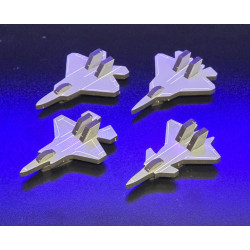
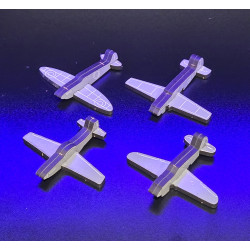
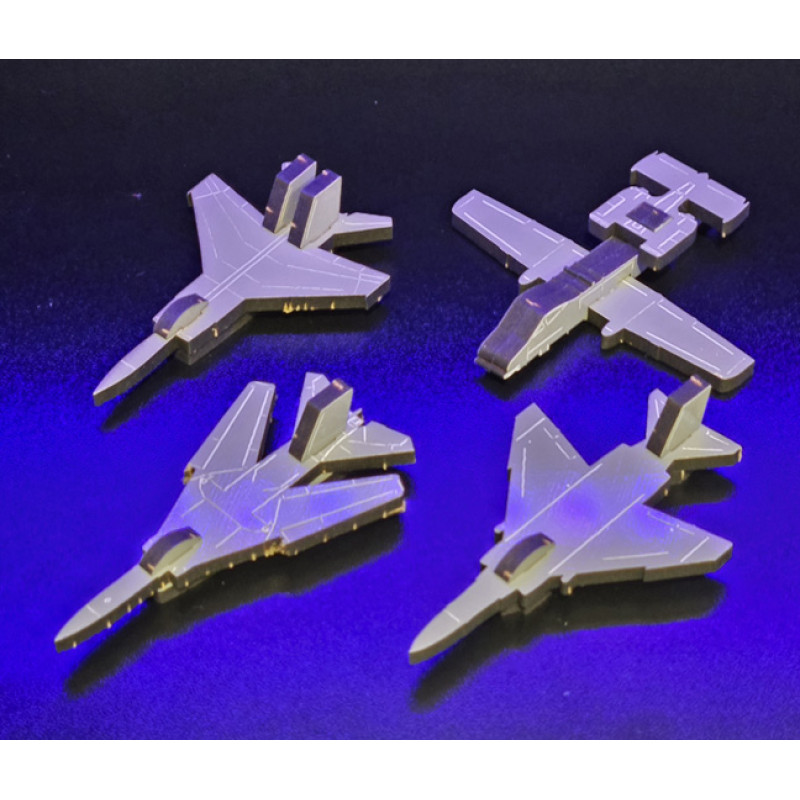
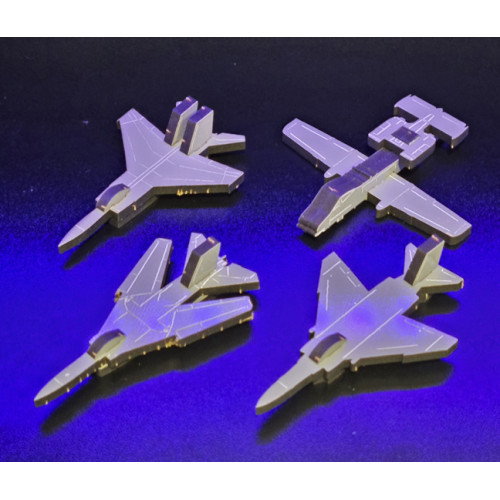
This kit comes in a flat panel and each model is constructed with precision friction fit tabs. Constructed of high density fiber wood with a painted grey surface and white etching. There are 4 models that comes in the kit each model is approximately 2" x 1.5" x .6" in size.
Warning: This product contains small parts and is not suitable for children under 3 years of age. Small parts may present a choking hazard.
Third-generation fighter jets emerged in the 1960s and 1970s, emphasizing speed, versatility, and missile-based combat over traditional gun armament. These aircraft combined supersonic performance, improved aerodynamics, and early guided missile systems with secondary air-to-ground capabilities, allowing them to perform multiple roles in combat. Fighters like the F-4 Phantom, MiG-23, and MiG-25 exemplified this generation, featuring more advanced avionics, radar, and increased payload capacity compared to earlier designs. While less maneuverable than later generations, third-generation jets marked a significant step toward multirole capability and modern aerial warfare tactics.
The A-10 Warthog, officially the A-10 Thunderbolt II, is a rugged, close-air-support aircraft built around its powerful GAU-8/A Avenger 30 mm cannon. Designed to survive heavy fire and operate from rough airstrips, it features titanium armor, redundant systems, and straight wings that allow exceptional low-speed maneuverability. Introduced in the 1970s, the A-10 excels at destroying armored vehicles, protecting ground troops, and loitering over battlefields for extended periods. Its simplicity, durability, and precision have made it one of the most respected and iconic CAS platforms in modern air combat.
The F-4 Phantom II is a twin-engine, two-seat fighter-bomber famed for its speed, versatility, and heavy payload. Introduced in the late 1950s, it became a backbone aircraft for the U.S. Navy, Air Force, and Marine Corps, as well as many allied nations. Capable of Mach 2+ speeds, the Phantom served in air-superiority, ground-attack, reconnaissance, and interceptor roles, adapting through constant upgrades. Its powerful engines, large radar, and ability to carry a wide array of missiles and bombs made it a dominant presence in Vietnam and throughout the Cold War. Rugged, adaptable, and influential in shaping modern fighter design, the F-4 remains one of the most iconic combat aircraft in aviation history.
The MiG-23 “Flogger” is a Soviet variable-sweep-wing fighter designed in the late 1960s to improve on earlier MiG designs with greater speed, range, and radar capability. Its swing-wing mechanism allowed both high-speed interception and shorter takeoff performance, while its powerful engine enabled Mach 2+ flight. Equipped with beyond-visual-range missiles and improved avionics for its era, the MiG-23 served widely across the Soviet Union and numerous allied nations. Though later overshadowed by more advanced fighters, it played a significant role during the Cold War as a flexible, hard-hitting interceptor and ground-attack platform.
The MiG-25 “Foxbat” is a high-speed Soviet interceptor and reconnaissance aircraft designed in the 1960s to counter advanced U.S. bombers and high-altitude threats. Built with massive twin engines and primarily stainless-steel construction, it can exceed Mach 2.8—and briefly even faster—making it one of the fastest military aircraft ever produced. Its large radar and powerful missiles gave it formidable long-range interception capability, while specialized variants excelled at high-altitude reconnaissance. Though not highly agile, the MiG-25’s sheer speed, climb rate, and altitude performance made it an iconic Cold War aircraft and a significant influence on Western fighter development.
Tags: model